
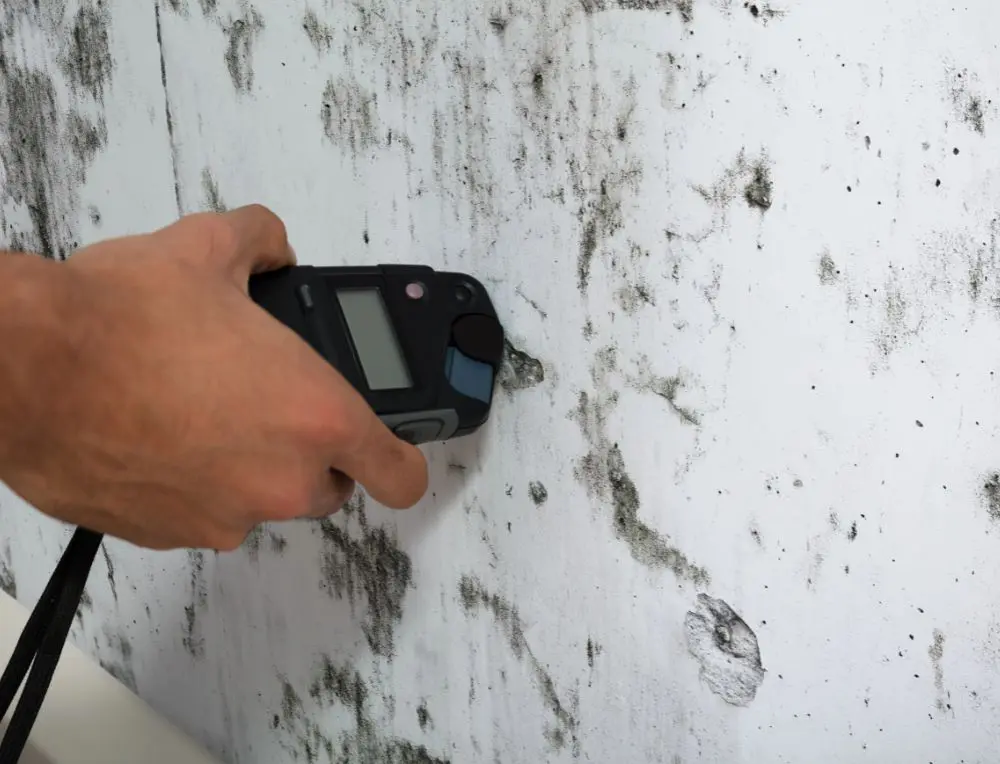
Mold Air Sampling vs. Tape-Lift Sampling: What Each Method Can Tell You
Reviewed by Vanguard Environmental Services · Updated August 19, 2026 · Explore the Environmental Testing Knowledge Hub
Air sampling and tape-lift sampling answer different environmental questions. Air samples characterize fungal structures captured from the air during a defined collection period. Tape lifts collect material directly from a specific surface. Neither method is universally better, and neither replaces a careful inspection for moisture, visible growth, affected materials, and building history.
What Is Mold Air Sampling?
During non-culturable air sampling, a calibrated pump draws a measured volume of air through a spore-trap cassette. Particles impact the collection surface inside the cassette, and a laboratory examines the captured material.
Vanguard Environmental Services uses PriorityLab for selected air-sample analysis. PriorityLab describes its mold services as including air, swab, tape, and settle-plate samples and publishes the BREEZE ST spore-trap cassette for professional indoor-air-quality sampling.
What an Air Sample May Help Evaluate
- Fungal structures captured in a specific location during the collection period.
- Differences among selected indoor locations or between indoor and comparison samples.
- Whether inspection findings justify additional source investigation.
- Project-specific questions when an appropriate sampling plan and interpretation framework have been established.
An air sample is a time-limited snapshot. Results can be affected by activity, airflow, HVAC operation, weather, humidity, doors and windows, cleaning, and recent disturbance. A low result does not prove that concealed growth is absent, and an elevated result does not identify the source by itself.
What Is Tape-Lift Sampling?
A tape lift uses an adhesive sampling medium to collect material directly from a visible or suspect surface. The laboratory examines material transferred from that precise location. PriorityLab’s published mold services include tape analysis, and its BREEZE E-Tape is designed to capture mold spores and particles from a surface.
What a Tape Lift May Help Evaluate
- Whether fungal structures are present in material collected from a particular suspect surface.
- The character of visible growth, staining, or residue at the sampled spot.
- A defined material question when destructive bulk sampling is unnecessary or inappropriate.
- Documentation connected to a photographed and clearly identified collection location.
A tape lift represents only the small surface area contacted by the sampling medium. It does not characterize the air, determine what is behind the material, or establish conditions elsewhere in the room or building.
Air Sample vs. Tape Lift: Quick Comparison
| Question | Air sampling | Tape-lift sampling |
|---|---|---|
| What is sampled? | Particles captured from a measured volume of air | Material collected directly from one surface |
| What area is represented? | The selected location during a defined time period | The exact contacted spot |
| Can it identify the moisture source? | No | No |
| Can it prove concealed growth is absent? | No | No |
| Typical strength | Characterizing airborne fungal structures under documented conditions | Characterizing visible or suspect surface material |
| Primary limitation | Results vary with time and collection conditions | Very small, location-specific sample area |
When Might Vanguard Recommend Both?
Using both methods may be appropriate when the investigation contains separate questions about a suspect surface and airborne conditions. For example, a tape lift might characterize material at one location while properly planned air samples provide additional information about selected rooms. More samples are not automatically better; each sample should have a defined purpose.
Why Inspection Comes First
- Document the concern. Identify odors, staining, visible growth, occupant observations, or prior events.
- Evaluate moisture and materials. Determine what conditions could support growth and which components may be affected.
- Define the sampling question. Decide what uncertainty a result could resolve.
- Select locations and controls. Record conditions that may influence interpretation.
- Interpret the laboratory report with the property findings. Do not treat the report as a stand-alone verdict.
Sampling does not diagnose illness, prescribe treatment, or guarantee that a building is universally safe. Vanguard evaluates building-side conditions and recommends appropriate next steps within the environmental scope.
Request Mold Inspection and Testing in Nashville
If you are unsure whether air sampling, tape-lift sampling, settled-dust analysis, or no sampling is appropriate, begin with the property question. Vanguard can provide a mold inspection or broader environmental assessment for Nashville and Middle Tennessee properties.