
What Professionals Look for During a Mold Inspection
A professional mold inspection is a building investigation—not simply a visual search for dark spots and not an automatic package of laboratory samples. The assessor’s job is to understand the concern, evaluate accessible conditions, document limitations, and determine which next steps fit the property evidence.
1. Review the Property Concern and History
The inspection begins with what prompted the call: an odor, stain, leak history, recurring condensation, visible suspect growth, crawl-space concern, real-estate question, or previous remediation. Timing, locations, repairs, seasonal patterns, and changes to the HVAC or building envelope can help focus the assessment.
2. Inspect Accessible Areas and Materials
The assessor evaluates accessible surfaces, moisture-prone areas, material conditions, ventilation indicators, and visible pathways. A standard noninvasive inspection cannot see through every wall, floor, ceiling, cabinet, or mechanical component. Destructive access or specialty investigation requires separate authorization.
3. Evaluate Moisture and Humidity Indicators
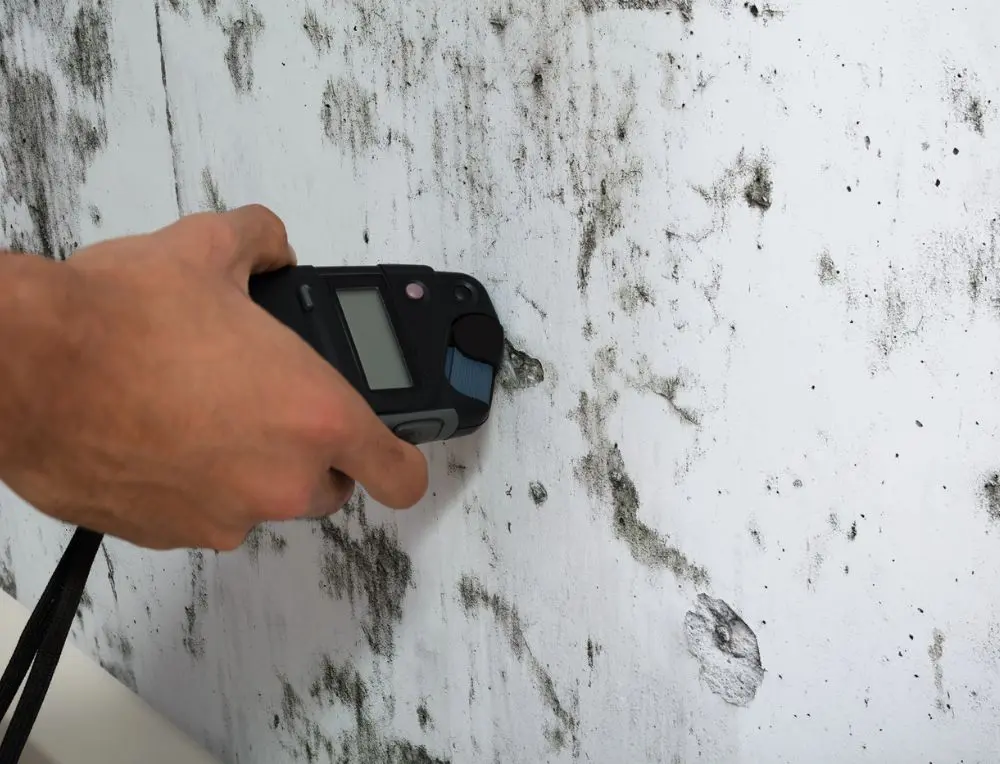
Moisture meters, humidity and temperature readings, and thermal-imaging observations may help identify patterns that deserve closer investigation. These tools require interpretation: a thermal camera displays surface-temperature differences and does not directly “see” mold or water through building materials.
4. Decide Whether Sampling Is Appropriate
Not every inspection requires testing. Air, tape-lift, material, or settled-dust sampling should be selected only when the result can answer a defined question. Professional collection documents the location, method, conditions, and chain of custody, and an independent laboratory performs the requested analysis.
5. Explain Findings, Limitations, and Next Steps
The final discussion should distinguish observations from assumptions and explain what was and was not evaluated. Recommendations may include source repair, drying, additional access, targeted testing, remediation, cleaning, monitoring, or consultation with another qualified professional.
Questions to Ask Before Hiring an Inspector
- What areas and systems are included in the inspection?
- Is the assessment invasive or limited to accessible conditions?
- How will moisture and sampling decisions be documented?
- Which independent laboratory will analyze any samples?
- Will the report explain limitations and condition-based next steps?
- Does the provider diagnose health conditions or make unsupported guarantees?
Vanguard evaluates building-side environmental conditions and does not diagnose illness or determine medical causation. Laboratory findings apply to the submitted sample and must be interpreted within the property scope.
Schedule a Mold Inspection in Nashville
Visit the complete mold inspection and testing service page, review related environmental-services FAQs, or request an assessment. Vanguard serves Nashville and communities across Middle Tennessee.